



-
Why You Shouldn’t Fly or Climb High Right After Diving 🐠✈️
September 28, 2026 -
How to rent a beautiful boat for your family and friends?
November 25, 2022 -

How do I book a course or diving and how do I contact you in Sharm El Sheikh?
November 12, 2022
Why You Shouldn’t Fly or Climb High Right After Diving 🐠✈️
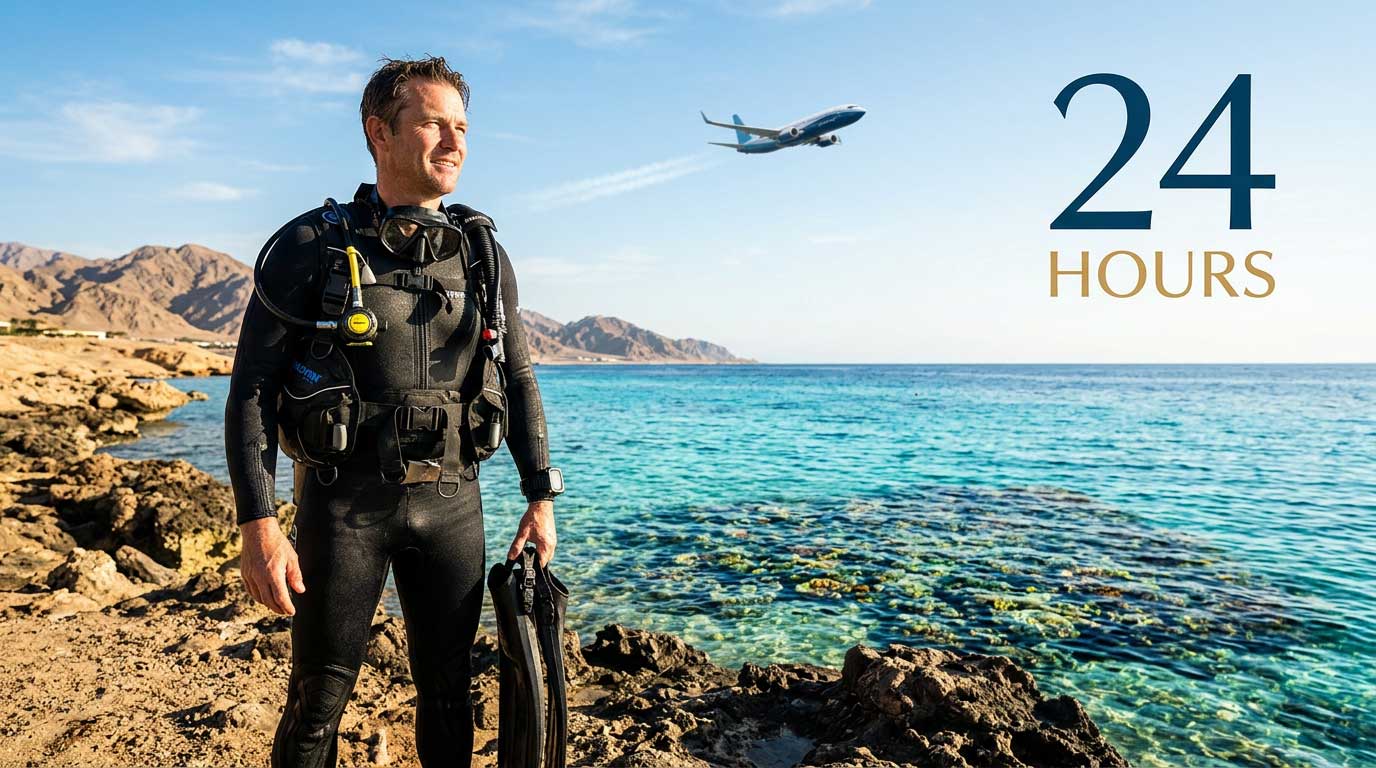
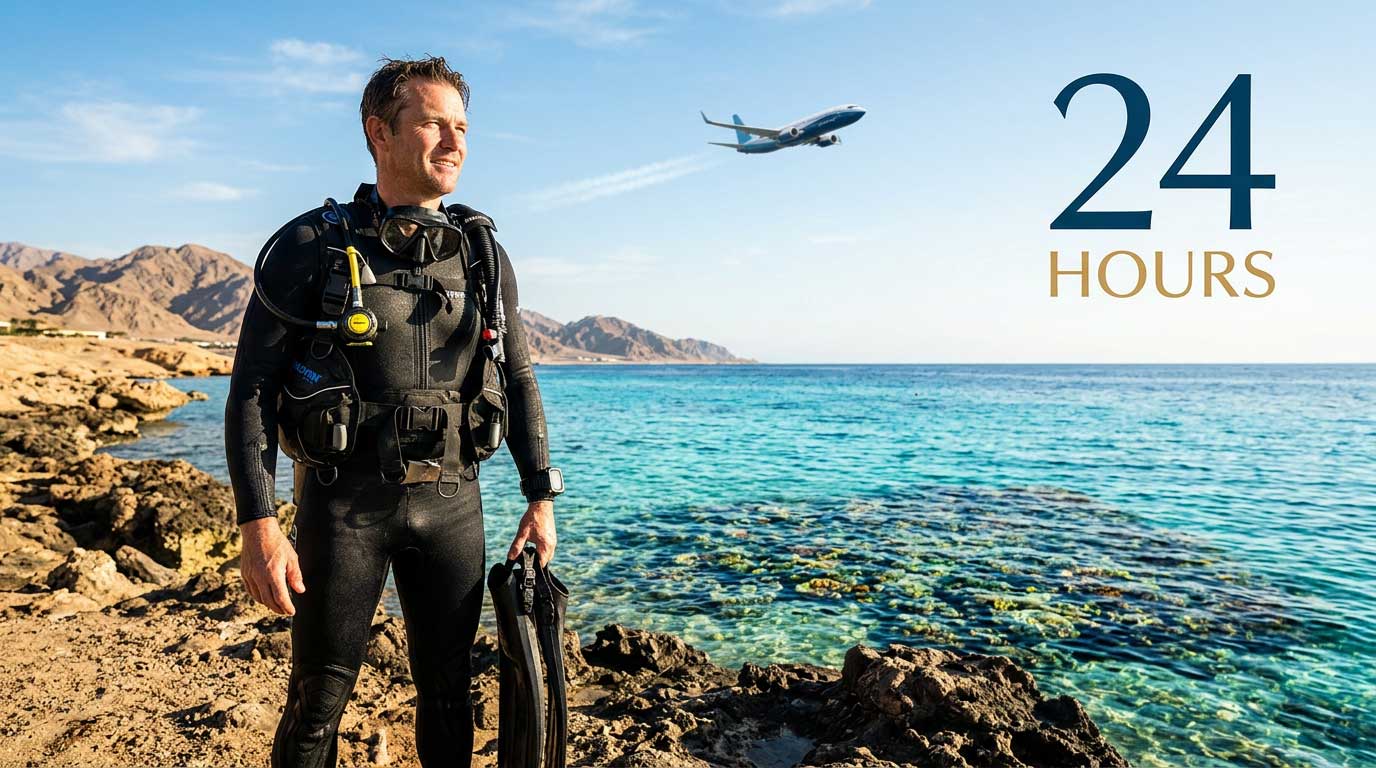 When you scuba dive, your body absorbs extra nitrogen under the increased underwater pressure. Back at the surface, this nitrogen comes out of your tissues slowly as you breathe. If you then ascend quickly to altitude – for example, flying on a plane or driving into the mountains above ~1000 m – the surrounding pressure drops. That can cause dissolved nitrogen to form bubbles in your blood and tissues, leading to decompression sickness (the “bends”).
To avoid this, divers wait before flying. Current guidelines generally advise waiting on the order of 12–24 hours after your last dive before ascending to altitude. For example, DAN (Divers Alert Network) recommends at least 12 hours after a single no-decompression dive and 18 hours after multiple dives. The FAA likewise advises at least 12 hours before flying (or going up to 8,000 ft) after non-decompression dives, and 24 hours before flying after dives requiring decompression stops. Many dive computers will calculate your required “no-fly time” based on your actual dives, but as a rule of thumb, planning around 24 hours on the surface at sea level is the most conservative approach.
Can you dive immediately after flying? Yes. If you’ve been at altitude (or on a plane) before diving, you have no excess nitrogen dissolved from diving yet, so there’s no added risk of decompression sickness from that prior flight. Just dive safely and enjoy the underwater adventure!
Sources: Authoritative dive medicine guidelines on wait times after diving before flying.
